Student Journey
EDUCATIONAL JOURNEY AT THOMAS’S COLLEGE
Student Journey
As part of our radical and innovative approach, we have redefined the journey through school into three distinct phases:
- Fourth Form (Years 7-8)
- Fifth Form (Years 9-10)
- Sixth Form (Years 11-13)
Each phase of school life has its own character, and within each phase, students are in small mixed-age pastoral groups, helping to mentor each other and to guide and be guided along their path.
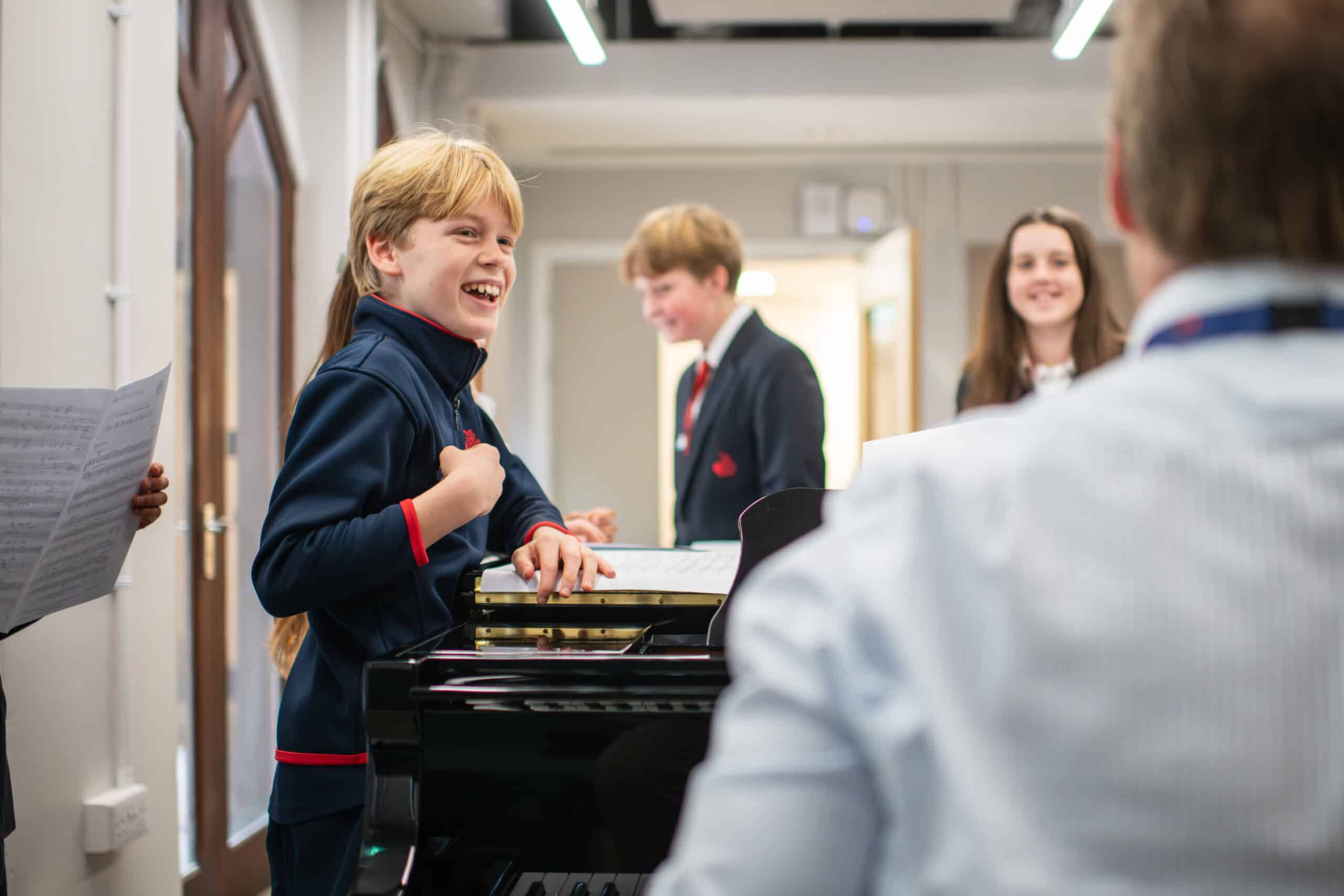
Students in every phase study within our brilliant Tutorial Programme, a bespoke personal development curriculum. They complete projects; they all enjoy games and sport, concerts and drama productions; and they take part in a vast array of house activities, clubs and trips.
Academic rigour is a given, but so is joy. Joy is in every day, every week and throughout the year.
Settling In
The start of the journey through school for everyone is the settling-in period, whether you start in Lower Fourth (Year 7), Lower Fifth (Year 9), or at any other point.
We work very hard to ensure everyone feels comfortable and excited about starting with us. Students generally come in for a day of activities and to meet new friends in the Summer Term, and there is also an Induction Day for new students, before everyone else starts in the Michaelmas Term, so that everyone feels at home before the official first day.
We organise buddies, create tutor groups bringing together students from similar areas, giving families the chance to see who lives near them – lots of different elements to ensure a smooth and welcoming start for everyone!
All students in the Fourth Form study every subject we offer apart from modern languages, where they choose two from French, Spanish, German and Mandarin. Their experience includes everything from dance to Politics, Classics to Philosophy and Economics and everything in between!
Their learning over two years culminates in the Thomas’s College Baccalaureate. This comprises five rigorous but creative examined assessments and four Level 1 Thomas’s Qualifications: project-based learning that equips them brilliantly for the challenges that lie ahead. In addition, it includes the Service and Activity Certificate, encouraging participation in a range of co-curricular activities and contribution to the lives of others. Completion is essential to achieve the full Baccalaureate Award. Our children showcase their activity and learning in an exhibition during the Summer Term of Upper Fourth (Year 8), to which families are warmly invited.
The Fourth Form is a wonderful time. It begins with a bonding trip at the start of Lower Fourth (Year 7), with more outdoor education and trips in the summer of both Lower and Upper Fourth. Students discover new passions, form close friendships and learn all sorts of skills, ready to graduate to the Fifth Form.
Connie Bennett
Director of Fourth Form and Transition
Fourth Form Curriculum Guide
In the Fifth Form, students have greater independence, meaningful choice and a broadened sense of responsibility. This is a time in which students begin to take ownership of their learning, discover new interests and challenge themselves in fresh and exciting ways.
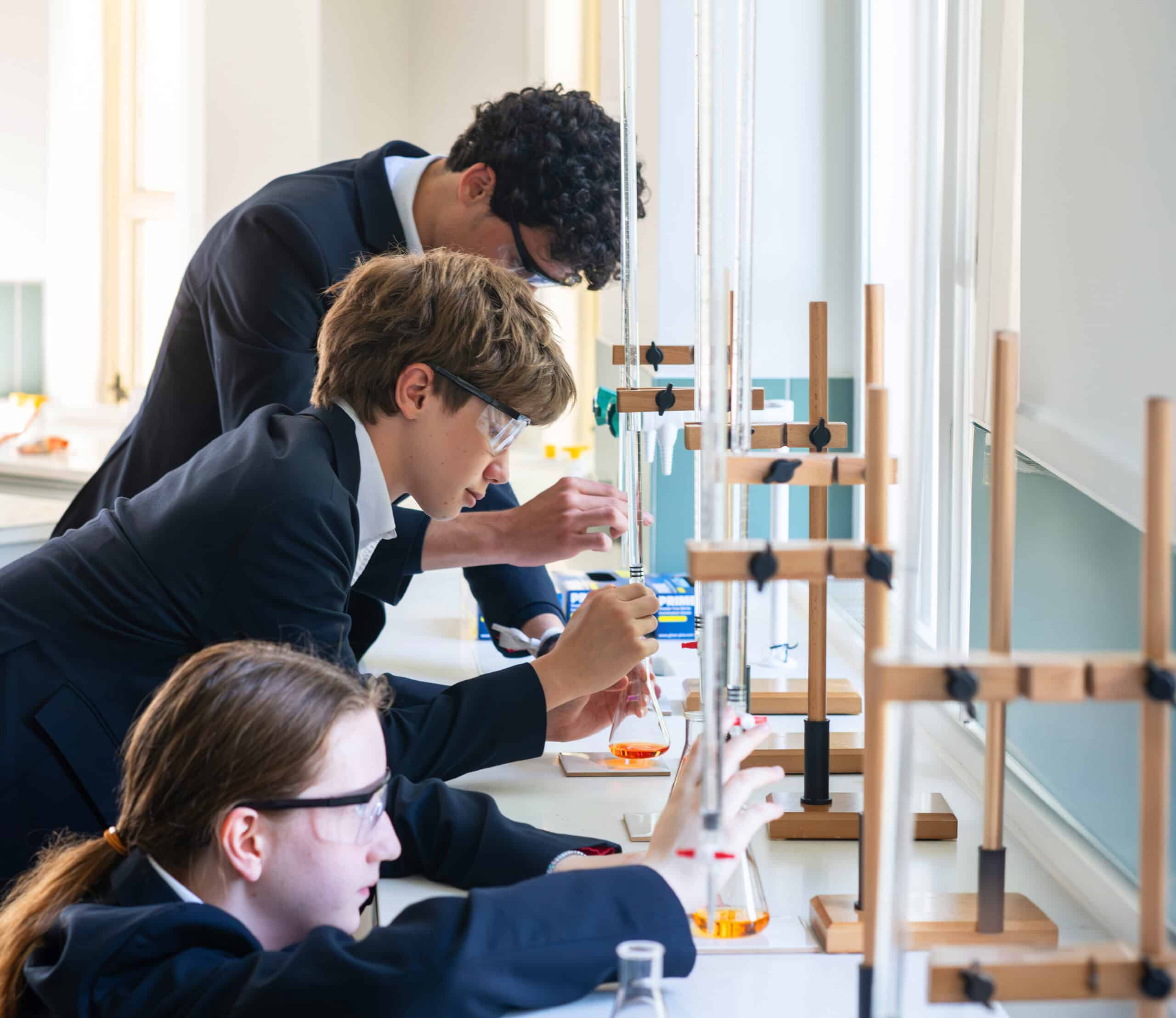
Lower Fifth (Year 9) is also the moment when students begin their first true experience of curricular choice. In addition to English, Maths and Science, they select eight additional subjects from a rich and diverse set of options. These choices enable students to deepen areas of passion, explore new disciplines, and build the confidence and curiosity that will guide them into Upper Fifth and beyond.
Choices are made from three Faculties of Learning:
Languages and Culture
- French
- Spanish
- German
- Mandarin
- Latin
- Greek
- Classical Civilisation
- Politics
Understanding the World
- Economics and Business
- English Literature
- Geography
- History
- Theology & Philosophy
Create, Invent, Perform
- Art
- Design & Engineering
- Computing
- Drama
- Music
All students take subjects from each faculty, so they have breadth as well as ownership of their learning.
In Upper Fifth (Year 10), students refine their choices so they end up with ten courses of study. However, the focus remains on learning, not over-assessment. While students in Upper Fifth are covering the material they will need for GCSEs, we proactively prioritise learning and childhood. GCSE criteria and choices about the future are reserved for Sixth Form (Year 11 and beyond).
Just as in Fourth Form, the Fifth Form starts with a bonding trip and ends with more outdoor learning for all.
Andrew Norton
Director of Fifth Form and Options
Lower Fifth Form Curriculum Guide
Upper Fifth Form Curriculum Guide
Starting Sixth Form a year earlier than most schools is one of our signature reforms that improves the educational experience for everyone.
All public examinations are focused into one phase of school life, freeing Years 7-10 to be focussed on learning, childhood and exploration. Sixth Form is future-focused, treating young people as grown-ups and helping them to face the necessary rigour of examination as part of their own journey to adulthood.
Students gain GCSEs and our own unique equivalent, Thomas’s Qualifications, at the end of Lower Sixth (for us: Year 11). They have two more years of specialism, responsibility, leadership and opportunity. Our Sixth Form pages give you a sense of these brilliant years at the top of the school.
Romain Pourre
Director of Sixth Form and Outcomes